

Would you send more email without testing it first? At The London Forum, very few people raised a hand. Yet sending too little can cost a business too. The debate left me asking how we can tell when more email creates more value.
It was the starting point for a lively debate around the motion: “Brands should send more email unless they can prove it’s costing them.”
Listening from the audience, I found myself interested in both sides. The discussion also exposed something more fundamental: we weren’t always talking about the same thing when we said “more email”.
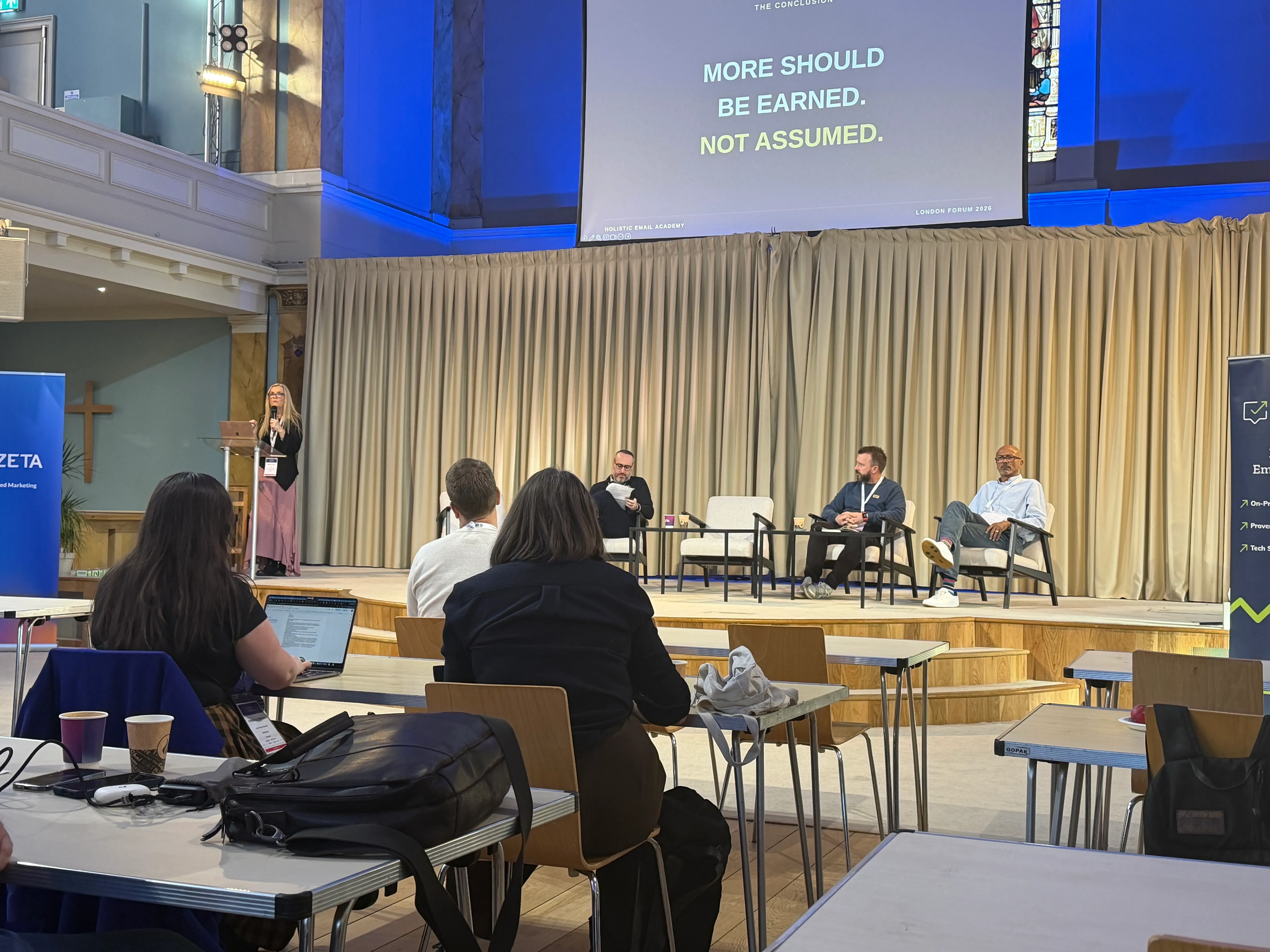
The frequency debate at The London Forum.
Moderator Scott Cohen of Inbox Army put the opening question to the room. Dela Quist argued in favour of the motion, Kath Pay of Holistic Email Academy argued against, and Antony Lea from EDF Energy brought the brand perspective.
The debate took place in the Great Hall on 16 November 2026. See the session in The London Forum agenda.




There was more agreement than the motion suggested
Kath opened by explaining that she has spent years challenging restrictive frequency rules. She supports investigating higher frequency and has seen it generate stronger results.
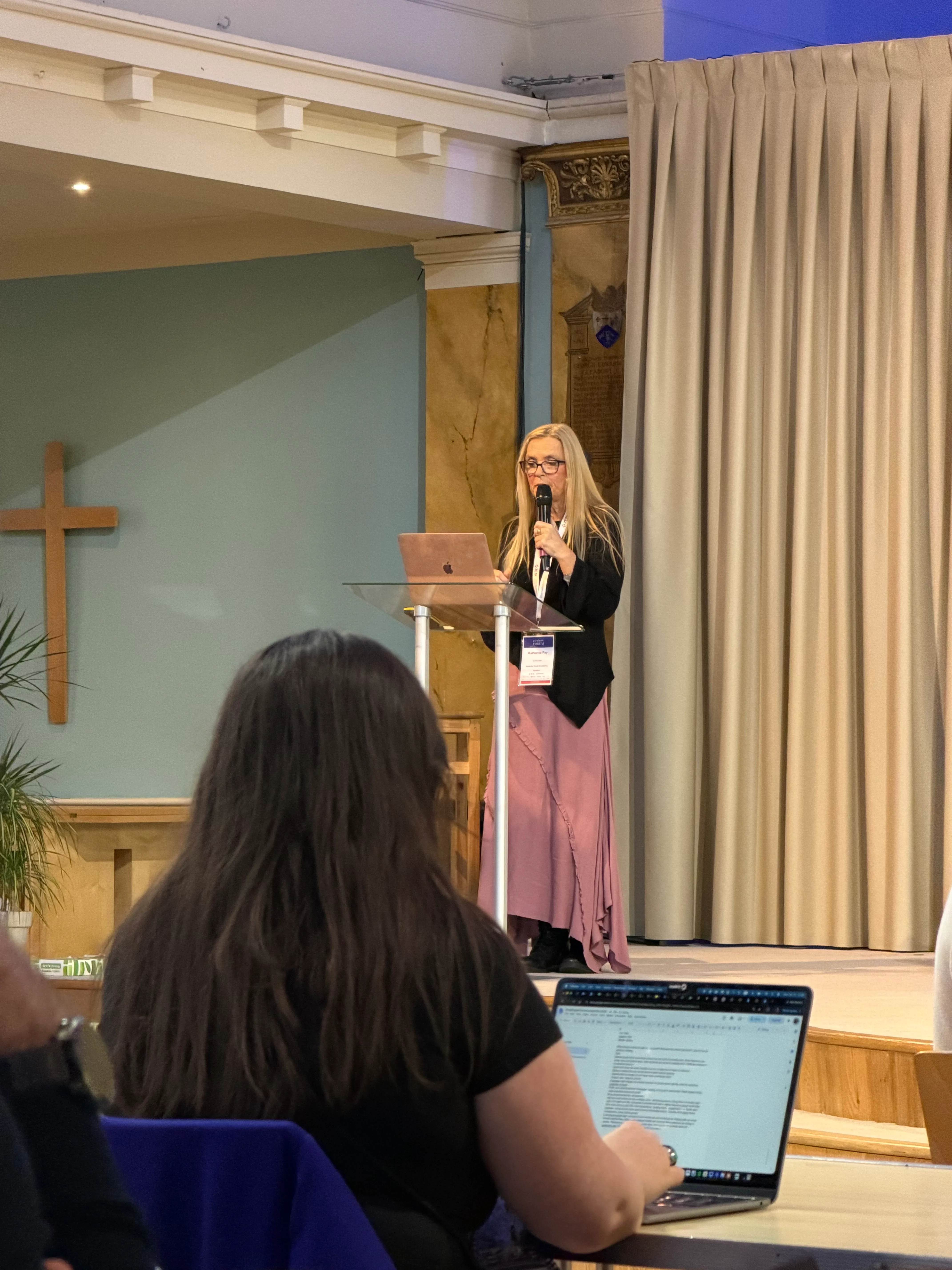
Kath Pay presenting her case for testing higher email frequency.
Her objection was to making an increase the default until someone proves it is costing the business.
“Increasing frequency should be a hypothesis to test, not a default strategy to defend.”
— Kath Pay
She also challenged the idea that keeping the current frequency is automatically safe. That could be costing sales too.
For me, this made the debate more interesting. Both speakers saw opportunities to send more. The disagreement concerned the starting assumption and the evidence needed to make the next decision.
Kath wanted brands to investigate how much more they could profitably send. Dela wanted the industry to question why another email so often gets treated as a risk before its opportunity is considered.
More emails to whom?
Dela’s strongest challenge, for me, was about the distribution of email across the database.
His argument was that brands can keep adding messages for their most engaged subscribers while sending very little to everyone else. Under a fixed sending allowance, those additional messages can consume capacity that could have been used to reach a broader audience.
“You’re just sending more and more email to fewer and fewer people.”
— Dela Quist
That changes the question considerably.
Adding another email for someone already receiving several messages a week is a different decision from contacting an eligible subscriber who rarely hears from you.
Dela advocated a minimum level of contact, suggesting one email a week. I saw that as his challenge to the room rather than a universal frequency recommendation.
The question it left me with was useful: do we actually know how many emails different parts of our audience receive?
A programme average can hide a lot. The campaign calendar tells us what we send. It takes a different view to understand what each subscriber receives.
The better rates didn’t produce the most revenue
Kath shared a three-month test for CalMac Ferries in which one group received twice as many emails as another. Read the full case study from Holistic Email Marketing.
The lower-frequency group had higher average open, click and conversion rates. Yet, according to the results she presented, the higher-frequency group generated 57% more revenue and 75% more transactions.
This was one of the clearest examples of why the measurement matters.
Looking only at campaign rates could have led to rejecting an increase that generated considerably more business. Each email could perform less efficiently while the programme delivered a stronger overall result.
Working in email analytics, that distinction stood out to me. We need campaign metrics, but a frequency decision also needs a view across multiple sends and a meaningful period.
Kath’s follow-up was equally relevant: would another increase have performed better again? That test hadn’t answered it.
Revenue and profit need to stay separate
The session asked whether more email means more profit. Kath reminded us that an increase in email-attributed revenue does not automatically establish additional business.
Some customers would have purchased anyway. Others might use an email discount when they would otherwise have paid full price. Email can also influence purchases that get credited to another channel.
That means the dashboard can both overstate and miss email’s contribution.
I think this deserves attention whenever we discuss frequency results. More attributed revenue is useful evidence, but we should be precise about what it proves.
The period we measure matters as well. A successful campaign or month does not necessarily tell us what happens to the customer relationship over a year.
Antony brought the internal pressure into the conversation
Antony described the tension between requests to send more to hit targets and questions about the cost of buying additional sends.
He also focused on the cost of an unsubscribe: losing the opportunity for future CRM conversations.
“What’s the cost of an unsubscribe?”
— Antony Lea
That brought a longer perspective to the discussion. An immediate revenue gain has to be considered alongside what the business might lose later.
Kath added a useful qualification. More sends create more opportunities to unsubscribe. In her frequency test, total unsubscribes increased while the unsubscribe rate per campaign remained broadly similar.
So a rise in total unsubscribes needs context. We need to understand its scale and potential cost alongside the additional value generated.
I appreciated Antony’s contribution because it grounded the debate in the decisions a brand has to make and explain internally.
Testing needs to be practical
Scott also raised the barriers to holdout testing: limited audience size, analytical capacity and reluctance to withhold messages that could generate sales.
Kath’s advice allowed for those constraints. If a proper holdout isn’t feasible, make a measured increase and monitor it over time. Look at commercial results, complaints and unsubscribes alongside engagement.
She also discussed comparing groups receiving different frequencies. Evaluating an additional email does not necessarily require leaving a group without any email.
Dela argued for smaller holdout groups maintained over longer periods.
What I took from this was that there are different ways to investigate the opportunity. The important part is understanding what your chosen approach can establish, and where uncertainty remains.
What I left thinking about
I left the session wanting to question the current sending schedule as much as any proposed increase.
How was it decided? Does it reflect customer behaviour, team capacity or a rule inherited years ago? And how differently do subscribers experience it?
Dela made me think about the people we may barely be reaching. Kath made me think about the evidence needed to justify each further increase. Antony brought the future customer relationship and business constraints into view.
My starting point would be to understand the distribution of sends across the audience. Then choose a specific opportunity to investigate and measure its effect over time.
The question I took away from the room was:
Who could we reach more effectively, and how will we know whether doing so creates more value?